Half-Built and Going Nowhere: The Real Reasons LS Swap Projects Die in the Garage
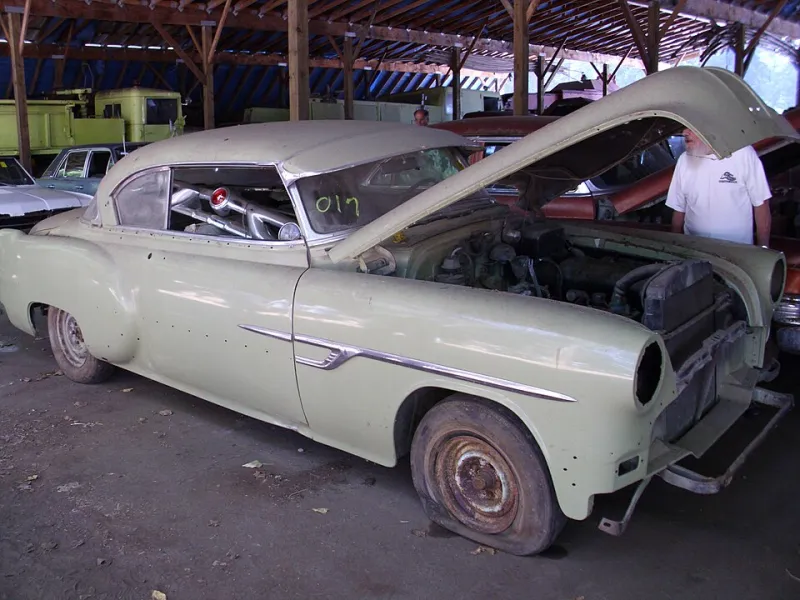
Photo: JOHN LLOYD from Concrete, Washington, United States, CC BY 2.0, via Wikimedia Commons
Walk through enough garages in this country and you'll spot it — the car on jack stands with an LS sitting on a cherry picker next to it, covered in a tarp. Coolant lines half-run. A wiring harness zip-tied to nothing in particular. A stack of receipts on the workbench. The owner will tell you they're "taking a break" or "waiting on a part." Sometimes that's true. But a lot of the time, that build is quietly dead and nobody's ready to say it out loud.
LS swaps have never been more popular, and the community has never had more resources. Better swap kits, affordable standalone ECUs, a million YouTube walkthroughs. And yet, unfinished builds are everywhere. So what's actually killing them?
The Honeymoon Phase Is Real — And It Ends Fast
Most builds start with a rush of energy. You score a low-mileage LQ4 out of a wrecked Silverado, pull it home, and suddenly you're deep in forums at midnight spec'ing out headers and transmission adapters. That phase feels great. It's all possibility and zero friction.
The problem is that friction always shows up eventually. Maybe it's the third time you've had to pull the engine because the motor mounts still aren't right. Maybe it's realizing the swap kit you bought doesn't quite work with your specific chassis year. The gap between "this is going to be awesome" and "this is genuinely hard" hits some builders like a wall.
Talk to guys who've abandoned projects and you'll hear a version of the same story: "I didn't realize how much fabrication was involved." The LS swap community does a fantastic job celebrating finished builds, but the messy middle — the grinding, frustrating weeks where nothing seems to go right — doesn't get nearly as much airtime.
Budget Exhaustion Is the Number One Silent Killer
We've talked before on this site about how a $3,000 engine can turn into a $15,000 education. But the specific way that kills projects isn't always a single big expense — it's death by a thousand small ones.
You need a different driveshaft than you planned. The radiator you bought doesn't clear the fan setup. The exhaust you ordered hits the steering shaft. Each fix is $200, $400, $600. None of them feel catastrophic on their own. But six months in, when you add it all up and realize you're $4,000 over budget with the car still not running, the math stops feeling manageable.
Builders who push through this phase almost universally share one trait: they had a contingency fund, or at minimum, a realistic expectation that the budget would grow. Going in with a hard, inflexible number is one of the biggest predictors of a stalled project. The swap will cost more than you think. That's not pessimism — it's just the reality of swapping a modern fuel-injected V8 into a vehicle it was never designed to live in.
When Life Gets in the Way — And Stays There
Here's the uncomfortable truth nobody posts about: sometimes the build stops because real life doesn't pause for hobby projects. Job changes, family obligations, health stuff, a move across the country — any of these can pull a builder away from the garage for weeks that turn into months.
The dangerous part isn't the initial pause. It's what happens to motivation during that pause. Once you've been away from a half-built car for long enough, walking back into the garage and staring at the unfinished mess starts to feel more overwhelming than exciting. The mental reset required to pick it back up gets harder the longer you wait.
Builders who successfully restart after a long break almost always say the same thing: they set a small, specific goal to get moving again. Not "finish the engine bay" — something like "get the motor mounts tacked in this weekend." Small wins rebuild momentum. Trying to tackle the whole project at once after a long layoff is a recipe for another stall.
The Engineering Rabbit Hole
Some builders don't stop because they run out of money or motivation — they stop because they get too deep into a problem with no clear answer. LS swaps, for all their popularity, involve enough variables that it's genuinely possible to spend weeks researching a single decision without arriving at a confident answer.
Transmission compatibility, PCM tuning strategy, cooling system design, exhaust routing — each of these can spiral into an overwhelming amount of conflicting information. Forums give you six different answers to the same question. YouTube videos contradict each other. And at some point, analysis paralysis sets in. The builder stops working on the car and starts "doing more research" indefinitely.
The fix here is accountability, not more information. Find a builder — online or in person — who has done the specific swap you're doing and get a direct answer from someone you trust. The LS community is full of people willing to help. Use them.
What the Builders Who Finish Actually Do Differently
After talking to a bunch of people on both sides of this — guys with finished, running builds and guys whose projects have been "almost done" for two years — a few patterns stand out.
They break it into phases. Instead of thinking about the full swap, they think about the next step. Get the engine in. Get it running. Get it driving. Get it tuned. Each phase has a clear endpoint, which means there's a regular sense of progress.
They document everything. Not for Instagram — for themselves. Keeping a build journal, even just notes on your phone, means you can pick up exactly where you left off after a break instead of spending hours trying to remember what you were doing.
They spend money on the right things early. Cheap motor mounts, bargain-bin wiring harnesses, and cut-rate swap kits are the source of a disproportionate number of mid-build disasters. Paying for quality at the foundation stages saves time, money, and sanity down the road.
They stay connected to why they started. This sounds soft, but it matters. The builders who push through rough patches tend to have a clear mental image of what the finished car will be — what it'll feel like to drive, where they'll take it, what it represents. That vision is fuel when the project gets hard.
Don't Let Your Build Become a Cautionary Tale
There's no shame in a project taking longer than planned. LS swaps are legitimately complex, and life genuinely does get in the way. But there's a difference between a build that takes three years and a build that quietly dies after eighteen months and never gets talked about again.
The graveyard of unfinished swaps is full of good intentions and bad planning. Know your real budget before you start. Set phase-based goals. Ask for help before you spiral into research paralysis. And when you hit the inevitable rough patch — because you will — set one small goal and go do it this weekend.
The finish line is real. Plenty of builders cross it every year. There's no reason yours can't be one of them.