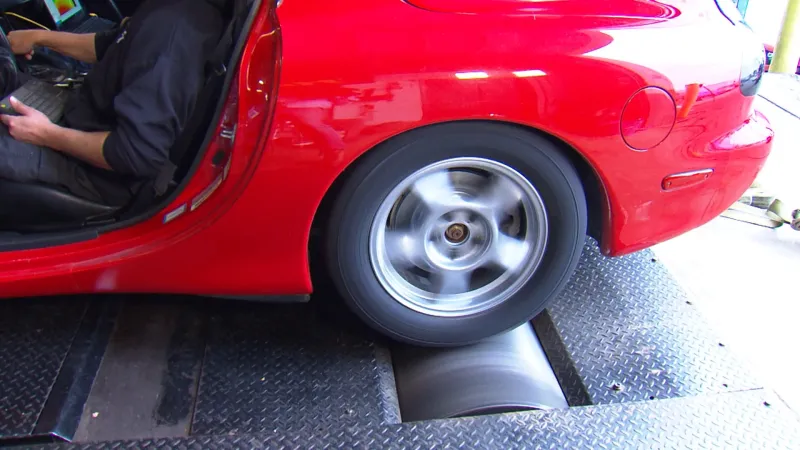
Separating Hype From Horsepower: The Street Builder's Guide to LS Bolt-Ons That Actually Pay Off
Open any LS-focused parts catalog and you'll find page after page of bolt-on upgrades, each one promising transformative power gains and a reason to max out your credit card. The reality of street driving, though, is a lot more humbling. Not every modification that looks great on a dyno sheet translates to something you'll feel on your morning commute or weekend cruise.
This isn't a knock on the parts themselves — a lot of them are genuinely excellent products. It's about matching your modifications to your actual use case. If you're a street driver who occasionally gets spirited on an on-ramp, your priorities are completely different from someone who races every other Saturday. Let's talk about what actually moves the needle for real-world street builds.
Intake Manifolds: Real Gains, Real Caveats
Few upgrades get hyped harder in the LS community than intake manifold swaps, and for good reason — the factory cathedral-port intake on early LS engines left performance on the table, especially at higher RPM. Swapping to a quality aftermarket unit like a FAST LSXR or a Holley Hi-Ram can net meaningful gains, but the where in the RPM range matters enormously for street use.
High-rise, single-plane style manifolds tend to move the power band upward. They love to rev and they shine above 5,000 RPM. On the street, how often are you actually up there? If your engine spends most of its life between 1,500 and 4,500 RPM — which describes the vast majority of street-driven LS builds — a high-rise manifold might actually make the car feel lazier in the range you use most.
For street builds, dual-plane manifolds or those specifically designed for low-to-mid RPM torque delivery tend to be the smarter buy. The FAST LSXr 92mm is a popular middle-ground choice that broadens the power curve without sacrificing drivability. Expect somewhere in the 15-25 horsepower range on a stock or mildly modified engine — real gains, but not the 50-plus number you might see in optimistic advertising.
ROI Verdict: Good investment if you choose a manifold designed for your RPM range. Poor investment if you buy a track-focused unit for a car that never sees a track.
Fuel Injectors: Don't Buy What You Don't Need
This is one of the most common ways street builders waste money. Larger injectors are not free horsepower — they're a supporting modification that becomes necessary when other changes demand more fuel. Dropping in 60 lb/hr injectors on an otherwise stock LS doesn't make power. It just gives your tuner a headache trying to get idle quality right with injectors that are massively oversized for the application.
Stock LS injectors are surprisingly capable. The 28 lb/hr units found in many Gen III applications flow enough fuel to support north of 400 horsepower on naturally aspirated builds when the rest of the engine is healthy and the tune is dialed in. If you're not making more power than that, save the injector money for something else.
Where injector upgrades make real sense is when you're adding boost, running a high-lift cam that significantly increases airflow, or building toward a power level where stock injectors will be running at 90-plus percent duty cycle. At that point, upgrading to 42 lb/hr or 60 lb/hr units from a reputable supplier like Delphi or Injector Dynamics gives you the headroom you need. Just make sure the tune follows.
ROI Verdict: Skip it until your build actually demands it. Premature injector upgrades are money spent on complexity, not power.
Camshaft Upgrades: The Most Misunderstood Modification
A cam swap is the upgrade that gets talked about more than almost anything else in LS circles, and it's also the modification most likely to disappoint street drivers who didn't fully research what they were buying.
The LS platform responds exceptionally well to cam swaps — the architecture loves a longer duration and higher lift profile. But cam selection for a street car is a genuine skill, and getting it wrong means a lumpy idle, reduced vacuum (which kills power brake assist), poor throttle response below 3,000 RPM, and a car that's miserable to drive in traffic.
Mild cam upgrades — something in the range of 218-224 degrees duration at .050 with around .560-.580 lift — can add 30-50 horsepower on a properly supported engine while keeping the car completely streetable. These are the cams that make sense for 95 percent of street builds. They wake up the midrange, improve top-end breathing, and still idle cleanly enough that you're not embarrassing yourself at a stoplight.
The aggressive 230-plus degree grinds you see advertised with big power numbers are cam profiles optimized for high-RPM power production. They're legitimate on the right build — high compression, ported heads, built bottom end — but on a stock or mildly built street engine, they often produce less usable power than a milder grind would, because the engine isn't set up to take advantage of what the cam is trying to do.
ROI Verdict: High ROI with the right cam selection. Low ROI — or negative ROI — with a cam that's too aggressive for the application. Do your homework before you buy.
Headers: One of the Best Dollars-Per-Horsepower Upgrades Available
If there's a bolt-on that consistently delivers on its promises for street-driven LS builds, it's a quality set of long-tube headers. The factory exhaust manifolds on most LS applications are significant restrictions — they're designed to package into tight engine bays and meet emissions standards, not to flow efficiently.
Long-tube headers with 1-3/4 or 1-7/8 inch primaries and a properly sized collector can add 25-40 horsepower on a stock engine, with gains that are felt across a broad RPM range rather than just at the top. That's a meaningful improvement in real-world driving, not just on a dyno graph.
The caveats are real, though. Long-tube headers require a tune update to account for the changed exhaust scavenging and oxygen sensor placement. Running without a retune leaves power on the table and can create drivability issues. You'll also want to think about ground clearance — some header configurations are aggressive enough to cause problems on anything other than a lowered performance car.
Short-tube or shorty headers are easier to install and clear emissions inspections more reliably, but the power gains are considerably smaller — often in the 10-15 horsepower range. For states with strict emissions testing, they may be the only practical option.
ROI Verdict: Excellent investment, especially long-tubes on vehicles that don't face emissions scrutiny. One of the highest-impact bolt-ons available for the money.
The Bottom Line on Street Build Priorities
If you're building an LS for the street and you want the best return on your modification budget, the order of operations matters. Headers first, then a proper tune, then a mild cam if the budget allows — that sequence will give you a genuinely faster, more satisfying street car without the compromises that come from chasing paper horsepower.
Avoid the trap of buying parts because they sound impressive in a catalog. The best modification for a street build is always the one that improves the power range you actually use, not the one that looks best on a dyno sheet at 6,500 RPM.