The Part of Your LS Swap Nobody Warns You About: Oil System Mistakes That Destroy Engines
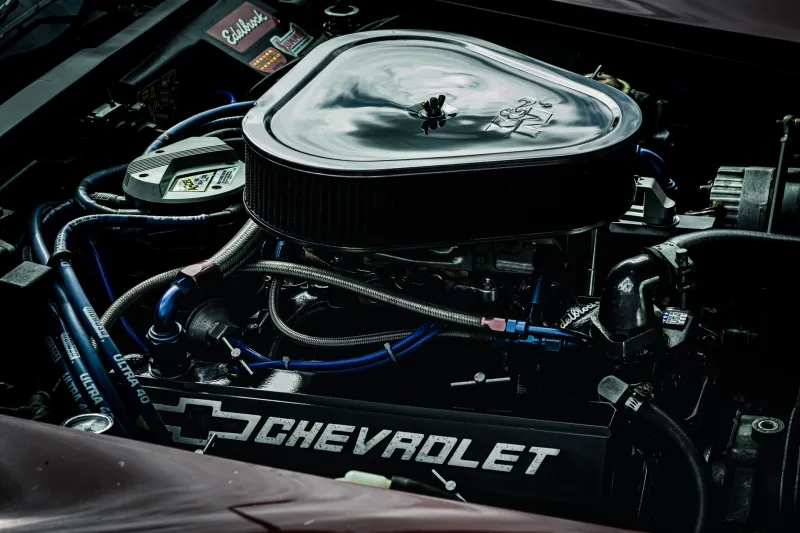
Every builder has a checklist. Mounts, headers, cooling, wiring, transmission — the usual suspects get plenty of attention. But talk to any seasoned engine builder who's seen a string of LS failures come across the bench, and they'll tell you the same thing: the oil system is where builds quietly go wrong. Not dramatically, not immediately, but eventually — and usually in the worst possible way.
The LS platform is genuinely tough. These engines came out of GM trucks and performance cars with solid engineering behind them, and they'll take abuse that would kill lesser motors. But that durability has a ceiling, and that ceiling drops fast when the oiling system is mismatched to the application. This isn't a fringe issue. It's one of the most common and most preventable causes of premature LS engine death, and the community doesn't talk about it nearly enough.
Why the Oil Pan Isn't Just a Reservoir
Here's where most people go wrong from the start: they treat the oil pan like a generic part. It holds oil, the pickup pulls from it, done. That thinking is exactly how you end up with a spun bearing at a track day or a starved motor after a hard pull on a canyon road.
The stock LS oil pan design varies significantly across the platform's history, and those differences exist for a reason. A pan designed for a longitudinally-mounted truck engine in a full-size pickup doesn't behave the same way when it's stuffed into a Foxbody Mustang or an S10 with a low crossmember. The geometry changes. The sump depth changes. The relationship between the pickup tube and the oil surface changes.
When you corner hard, brake aggressively, or pull sustained high-G loads, oil moves. Physics doesn't care that your engine needs lubrication. Without proper baffling and a sump design matched to your car's dynamics, the oil sloshes away from the pickup tube at exactly the moment the engine is working hardest. That's oil starvation — and it doesn't take long to start chewing up rod bearings.
Pickup Tube Placement: The Detail That Ends Builds
The pickup tube is simple in concept: it draws oil from the pan and feeds the pump. But where the end of that tube sits relative to the pan floor, and how much clearance exists between the tube and the sump walls, matters enormously.
Too much clearance and you're pulling air-entrained oil under hard acceleration or cornering. Too little clearance and you're restricting flow at high RPM. Either scenario spells trouble. The factory specs exist for a reason, and when builders mix pans, pumps, and pickups from different LS generations or different applications, those specs go out the window.
This is especially common in budget builds where parts are sourced from multiple donor vehicles. A truck pickup tube dropped into a car pan, or a pan from a transverse application bolted under a longitudinally-swapped engine — these combinations look like they fit, and sometimes they even bolt up cleanly, but the internal geometry is wrong. You won't know it until the damage is already done.
Baffling Design and Why It Separates Street Builds From Track Builds
For a daily driver that sees mostly straight roads and occasional spirited driving, a well-chosen OEM-style pan with basic baffling is often enough. The oil stays reasonably settled, the pickup stays submerged, and life is good.
Push that same setup into autocross, road course duty, or even aggressive street driving in the mountains, and the picture changes fast. Sustained lateral G-forces will drain the sump to one side. Hard braking moves oil forward. Hard acceleration moves it rearward. Without proper baffling — physical barriers inside the pan that control oil movement — the pickup goes dry and the engine starts making decisions about which bearings to sacrifice.
Aftermarket pans designed for performance applications address this with trap doors, windage trays, and multi-chamber sump designs. Companies like Dailey Engineering, Canton, and Moroso have invested serious development time into LS-specific pan designs that manage oil movement under load. These aren't luxury upgrades for race cars — they're practical insurance for any build that's going to see real-world performance driving.
If your swap is going into a car you plan to drive hard, budget for a proper pan from the beginning. Retrofitting one after the engine is in the car is miserable work.
The Sludge Problem Nobody Talks About
Oil starvation gets most of the attention because it's dramatic — bearings spin, engines seize, and the damage is immediately obvious. But there's a slower, quieter version of oil system failure that's just as destructive over time: sludge buildup from poor circulation.
When an oil pan has dead zones — areas where oil sits stagnant instead of circulating back to the pickup — heat and oxidation break that oil down faster. The byproducts accumulate. Over time, you get sludge deposits that restrict oil passages, clog the pickup screen, and gradually starve the engine of the clean oil it needs. This process can take thousands of miles to manifest as obvious damage, which is exactly why it's so dangerous. By the time you notice something's wrong, the wear is already significant.
Proper pan selection with good internal flow geometry, combined with appropriate oil change intervals and quality oil, prevents this. Ignoring it because the engine runs fine today is how you end up with a teardown that reveals years of quiet damage.
Matching the System to the Build
So what's the practical takeaway? Match every component of your oil system to your specific application — not just the engine, but the chassis, the driving environment, and your performance goals.
For a street truck swap that'll never see a track, a quality stock-replacement pan with the correct pickup for that pan is likely sufficient. For a performance street car that might see occasional track days, step up to an aftermarket pan with improved baffling and a windage tray. For anything dedicated to performance driving — autocross, road racing, drag racing with hard launches — go full race-oriented with a pan designed specifically for those conditions.
Always verify pickup-to-pan clearance when mixing components. When in doubt, measure. A half-inch of clearance where the spec calls for a quarter-inch is the kind of detail that costs you an engine.
Check the dipstick tube routing too. In tight swap applications, builders sometimes modify or reroute the tube in ways that give inaccurate readings — another silent killer that's easy to overlook during a busy build.
Don't Let the Last Detail Be the Fatal One
The LS engine deserves a complete build, and that means every system gets the attention it needs — including the unglamorous ones. Cam specs and intake choices make for better forum threads than pickup tube clearance and baffle design, but the oil system is what keeps all those sexy parts alive.
Get the pan right. Verify the pickup. Baffle for your use case. It's not exciting work, but it's the difference between a build that runs hard for years and one that grenades itself before you've really had a chance to enjoy it.