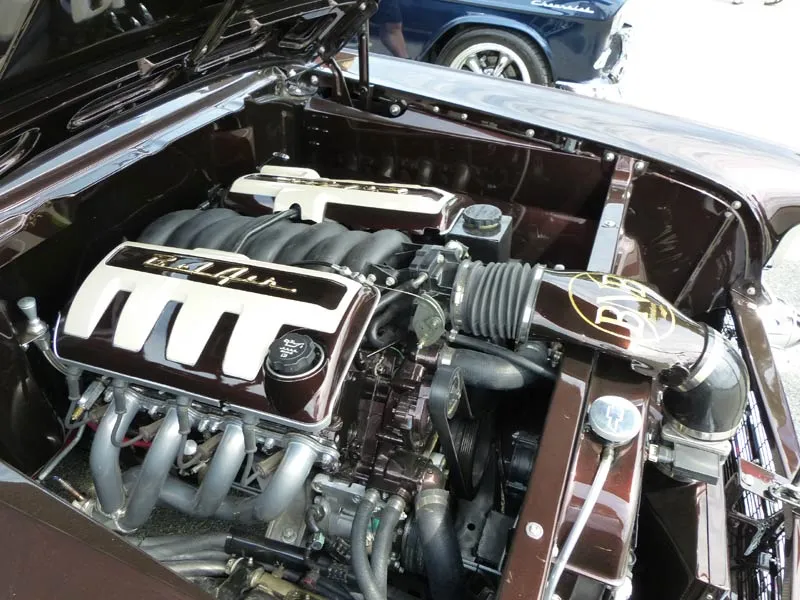
Casting Numbers Don't Lie: What That Code Stamped on Your Junkyard LS Actually Tells You
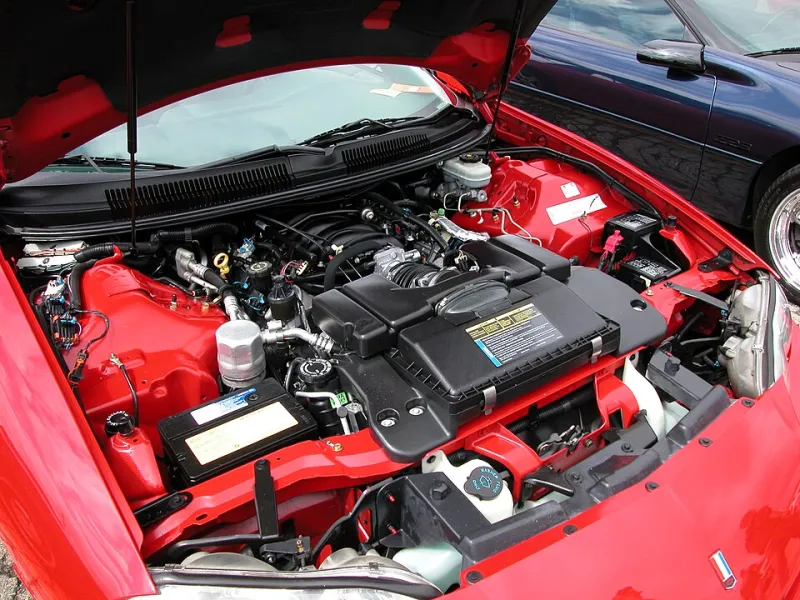
Photo: Rich Niewiroski Jr., CC BY 2.5, via Wikimedia Commons
Walk into any pick-and-pull yard on a Saturday morning and you'll see the same scene play out. Somebody's crawling under a wrecked Tahoe, reading off the odometer to their buddy like that six-digit number is the whole story. Meanwhile, a savvy builder two rows over is crouched next to a blown-up Silverado, flashlight in hand, squinting at a casting number on the block — and quietly deciding that engine is absolutely worth the pull.
Year and mileage are convenient shortcuts. Casting numbers are the truth. If you're serious about building something that performs, lasts, and doesn't create compatibility headaches down the road, learning to read these codes isn't optional — it's the foundation of smart junkyard shopping.
Why the Casting Number Beats the VIN Every Time
Here's the thing about LS engines that trips up a lot of newer builders: GM used the same engine family across an enormous range of vehicles and model years, but the block, heads, and other major castings weren't identical across all of them. Two engines that share the same displacement and the same production year can have meaningful differences in wall thickness, head flow characteristics, oiling provisions, and even bore spacing tolerances.
The VIN tells you what car the engine came out of. The casting number tells you what the engine actually is. Those are two very different pieces of information, and conflating them is how builders end up with a block that doesn't accept their chosen cam, or heads that strangle power potential before the build even gets started.
Casting numbers are typically found on the rear of the block near the bellhousing, on the side of the block above the oil pan rail, and on the ends of the cylinder heads. They're usually six to eight alphanumeric characters, and every digit matters.
Block Castings: Thick Walls, Thin Walls, and Why It Matters for Power
For the block itself, the casting number is your first indicator of how far that short block can realistically go. The LS engine family spans iron and aluminum blocks, and within those categories there are significant differences in wall thickness and structural integrity.
The 6.0L iron blocks — commonly found in trucks and SUVs — are widely regarded as the toughest foundation in the junkyard LS ecosystem. Casting numbers like 12561721 (the L96/LQ4/LQ9 family) represent thick-wall iron construction that can handle serious boost and high compression without flinching. These are the blocks that show up in budget turbo builds running 700+ horsepower on stock internals because the casting itself has the structural margin to survive it.
Aluminum LS blocks are lighter and found in performance cars like the Corvette and GTO, but they're not all created equal either. The LS1 blocks from early C5 Corvettes have known issues with main bearing bulkhead cracking under sustained high-load conditions. Later aluminum blocks improved on this, but you need the casting number to know which generation of aluminum you're actually dealing with — the car's model year alone won't tell you.
Head Castings: Where Most Builders Leave Power on the Table
If block casting numbers determine your ceiling for power, head castings determine how quickly you get there. The LS family covers an enormous range of cylinder head designs, and the difference between a set of cathedral-port truck heads and a set of rectangle-port LS3 heads is not subtle — we're talking potential differences of 60 to 100 horsepower with identical displacement and supporting hardware.
The most commonly encountered head castings in the yard fall into three broad categories: cathedral port (found on most LS1, LS2, LQ4, and LQ9 applications), square port (LS3, L92, and related variants), and the LS7-specific titanium-valved units that you'll almost never find at a pick-and-pull because anyone who knows what they have isn't leaving them on a wrecked Corvette.
For cathedral-port heads, casting number 317 (from the LQ4 and LQ9) is one of the most sought-after pulls in the yard. These heads feature larger 2.00-inch intake valves and 68cc combustion chambers, which makes them a genuine performance upgrade over the smaller-valved truck heads found on lesser 6.0L applications. The difference between a 317 casting and a lesser cathedral-port head is meaningful enough that experienced builders will pass on a complete engine to go find a bare cylinder head with the right number.
Square-port heads — identified by castings like 5364 (L92) and 823 (LS3) — represent the next evolution and flow significantly better than any cathedral-port casting at high lift. The catch is that they require matching square-port intake manifolds, which adds to the swap's parts list and budget. Know what you're buying before you commit.
The Compatibility Traps Hidden in Casting Generations
Casting numbers also flag compatibility issues that can derail a build if you're not paying attention. The most common landmine is mixing cathedral-port and square-port components — they're physically incompatible without adapter plates or custom manifolding, and that's a headache nobody needs mid-build.
Another casting-specific issue involves the LS1 blocks produced early in the C5 Corvette's run. The 1997 and 1998 blocks used a different cam sensor location and some slightly different provisions compared to later castings, which can create headaches when trying to run a modern standalone harness or updated fuel injection system. Again, the casting number reveals this. The car's model year gives you a rough approximation, but the casting is definitive.
Flex-fuel provisions are another area where casting numbers matter more than most builders realize. Some later truck blocks were cast with provisions for the active fuel management (AFM) valley plate and lifter oiling system. If you're pulling one of these and planning to delete AFM — which most performance builders do — you need to know whether your block casting requires the full delete kit or just a simple cam swap. The casting number tells you.
Making the Call at the Yard
So what does this look like in practice? Before you head out, spend twenty minutes building a reference sheet of the casting numbers you're targeting based on your build goals. If you're building a budget boost setup, you want iron block castings from the 6.0L truck family. If you're building a naturally aspirated street car and want the best head flow for the money, you're hunting 317 castings or better. If weight matters and you're comfortable with the limitations, you're cross-referencing aluminum block castings to avoid the problematic early units.
At the yard, bring a flashlight, a wire brush for cleaning off grease and grime, and your reference list. Don't let a low odometer reading talk you into a lesser casting, and don't let a high-mileage number scare you away from a superior one. A 180,000-mile iron block with the right casting and clean oil passages is worth more to a serious builder than a 60,000-mile unit with a problematic head casting and a thin-wall block.
The junkyard is full of LS engines. The right LS engine — the one that matches your power goals, your budget, and your downstream parts choices — is a much smaller subset of that pile. Casting numbers are how you find it without guessing.