The Radiator Got All the Credit, But These Parts Lost the War
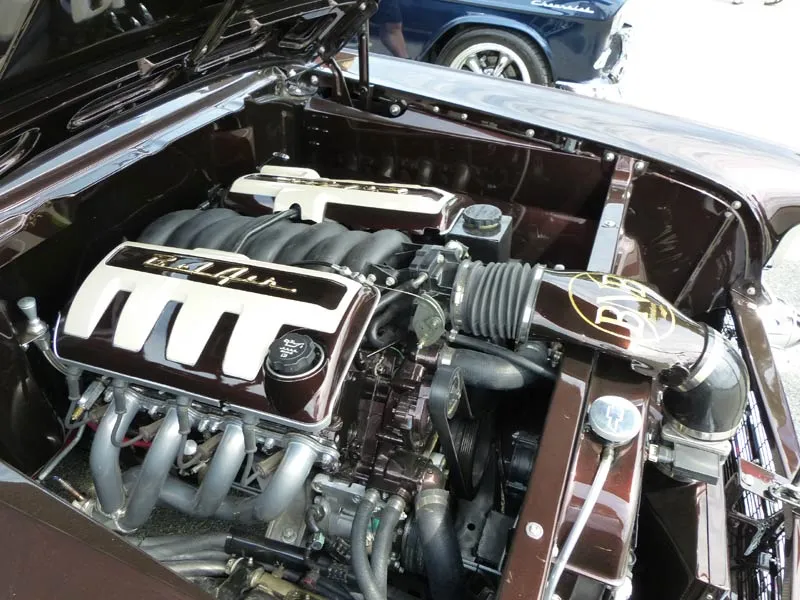
Photo: Richmond AACA, CC BY 2.0, via Wikimedia Commons
There's a pattern that shows up over and over in LS swap builds, and it goes something like this: builder does their homework on the radiator, orders a quality three-row aluminum unit with the right CFM fan, plumbs it in correctly, and then watches the temperature gauge climb on the first hot summer day of driving. Forum threads get posted. Fingers get pointed at the thermostat, the water pump, the head gaskets. Meanwhile, the actual culprit is sitting right there in plain sight — or more accurately, several culprits that nobody thought to treat as part of a unified system.
Cooling an LS swap isn't a single-component problem. It's a thermal management problem, and the radiator is just one node in a network that includes your transmission fluid, your engine oil, your intake charge temperature (if you're boosted), and even the size of your coolant overflow reservoir. When one of those nodes is undersized, poorly positioned, or missing entirely, it creates a heat load that eventually overwhelms everything else — including that expensive radiator you were so proud of.
Let's break down where builders actually lose this fight.
Transmission Fluid Is Engine Heat You're Not Counting
Automatic transmission fluid runs hot. Under hard driving conditions — towing, track days, spirited backroad runs — ATF temperatures in a high-output LS-backed transmission can push past 200°F without breaking a sweat. That heat has to go somewhere, and if you don't have a dedicated transmission cooler doing the work, it's either going back into the radiator's internal cooler (if your radiator even has one) or it's staying in the fluid and cooking your clutch packs.
Here's the part that hurts: a lot of builders who upgrade to a quality aluminum radiator delete the internal trans cooler circuit in the process, because the new radiator doesn't have one. They figure the external cooler they ordered will handle it. Then they mount that cooler behind the bumper cover where it gets no airflow, or they run undersized -6AN lines that restrict flow, and suddenly they've got a transmission running 50 degrees hotter than it should be.
The fix is straightforward but it requires treating the trans cooler as a first-class component, not an afterthought. Size up to a stacked plate cooler with real surface area, mount it somewhere that actually sees moving air, and run proper line sizing. Your 4L80E will thank you every time you merge onto the interstate.
Engine Oil Cooling: The One Builders Skip Until It's Too Late
Most naturally aspirated street builds skip an oil cooler entirely, and honestly, in a mild build running reasonable power on a temperate day, they can get away with it. But push the power up, add a supercharger, or start doing any kind of sustained high-load driving, and oil temps become a real variable.
LS engines run the oil through the block in ways that make it a secondary cooling medium — it's pulling heat out of the rotating assembly and carrying it back to the pan. If your oil is already heat-soaked because the pan is sitting in a hot exhaust environment and there's no cooler in the loop, you're asking the engine oil to do a cooling job it can no longer perform effectively. Viscosity drops, film strength drops, and bearing wear accelerates in ways you won't notice until you pull the motor.
A quality sandwich-plate oil cooler isn't a huge investment, and for any build making north of 450 horsepower or seeing track use, it's cheap insurance. The positioning matters too — you want coolant flowing to it before it gets heat-soaked from the engine, not after.
Intercoolers and the Heat Soak Nobody Talks About
If you're running a supercharger or a turbo on your LS swap, you've got an intercooler (or you should). But intercooler efficiency isn't just about core size — it's about the thermal management of the entire charge cooling circuit.
Air-to-air intercoolers depend entirely on airflow. If your intercooler is tucked behind a bumper with a tiny inlet opening, or if it's sharing space with the AC condenser and the transmission cooler with no separation or ducting, you're going to see massive heat soak under sustained load. That manifests as power that falls off a cliff after a few hard pulls — the kind of thing that looks like a tune problem when it's actually a packaging problem.
Water-to-air intercoolers solve the airflow dependency but introduce a separate reservoir and pump circuit that needs to be sized correctly. An undersized reservoir — say, a two-quart unit on a roots blower making serious power — will heat-soak in minutes of hard driving. The math here is unforgiving: more power means more heat rejection demand, and the reservoir has to have enough thermal mass to absorb it between cooling cycles.
Your Overflow Reservoir Is Part of the Cooling System (Seriously)
This one gets overlooked almost universally. The coolant overflow reservoir — or degas bottle, depending on your setup — isn't just a catch tank for expansion. In a properly functioning pressurized system, it's an active participant in maintaining consistent coolant volume and preventing air pockets from forming in the system.
A lot of LS swap builders grab whatever universal reservoir fits in the corner of the engine bay and call it done. But if the reservoir is undersized for the coolant volume of your engine, or if the cap rating doesn't match your system pressure, or if the routing creates a high point where air gets trapped, you're going to see inconsistent cooling behavior that looks like a hundred other problems. Hot spots in the heads, coolant pushing out under hard acceleration, temperature swings that don't correlate with load — all of it can trace back to a reservoir that was never right for the application.
Treating It Like a System, Not a Parts List
The builders who nail their LS swap cooling are the ones who draw a thermal map before they start ordering parts. They account for every fluid that needs to reject heat — coolant, ATF, engine oil, charge air — and they design the airflow through the engine bay to serve all of those components in priority order.
That usually means making some hard packaging decisions. Maybe the AC condenser moves forward to give the intercooler a cleaner shot at incoming air. Maybe the transmission cooler gets its own dedicated duct instead of sharing space with everything else. Maybe the oil cooler gets a thermostat so it doesn't over-cool the oil on cold mornings while still doing its job on hot days.
None of this is exotic engineering. It's just systems thinking applied to a problem that most people treat as a single-component shopping decision. The radiator is important — get a good one — but don't let it be the only thing you think about. The rest of the cooling equation is where most builds quietly fail, and where the smart money actually makes a difference.