How a $8,000 Quote Becomes a $25,000 Bill: The Real Math Behind LS Swap Budgets
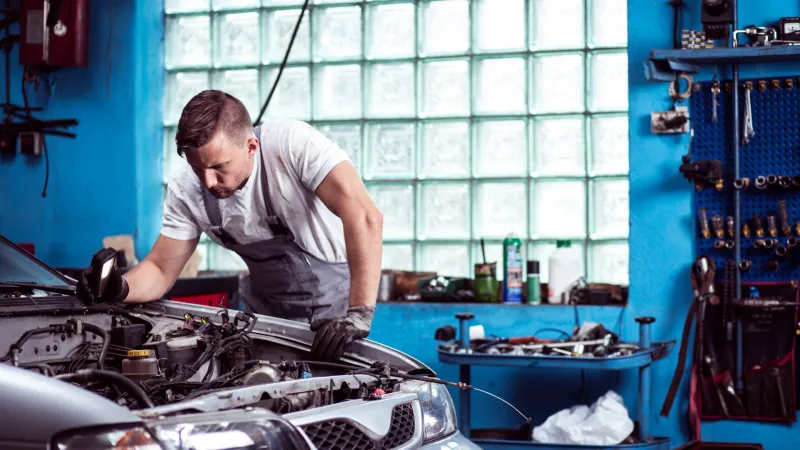
Photo: mechanic shop invoice auto repair bill calculator budget planning, via wallpapers.com
You did your homework. You called three shops, compared numbers, and landed on what felt like a reasonable estimate. Eight grand, maybe ten with a little wiggle room. Then the first teardown happens, and suddenly your phone is ringing with news that nobody warned you about.
This isn't a rare horror story. It's practically a rite of passage in the LS swap world. The gap between what a shop quotes and what a builder actually spends isn't usually the result of dishonest shops or naive customers — it's the result of a fundamentally broken way of estimating work that involves a lot of unknowns. If you want to protect yourself, you need to understand exactly where that money goes.
Why Initial Quotes Are Almost Always Incomplete
Here's the uncomfortable truth: most shops quote based on the best-case version of your job. They're not lying to you. They're quoting what the job should cost if everything goes smoothly, the donor engine is clean, the chassis cooperates, and no surprises show up. The problem is that LS swaps almost never go that smoothly.
A shop gives you a number based on a standard parts list and a rough labor estimate. What they can't account for upfront is the condition of your specific vehicle, the hidden rust in your crossmember, the fact that your donor LS has a cracked piston, or that your transmission tunnel needs to be cut and rewelded because the headers won't clear. Each of those unknowns carries a dollar figure, and those figures stack fast.
The honest move — which not every shop does — is to build a quote that includes discovery work: a teardown inspection before committing to a final number. If your shop isn't doing that, you're essentially signing a blank check.
Machine Work: The Budget Item Nobody Talks About
If you pulled your LS from a junkyard or bought it used off a Facebook Marketplace listing, there's a decent chance it needs machine work before it goes in the car. And machine work is expensive, time-consuming, and non-negotiable if you want the engine to last.
A basic hot tank cleaning, deck resurfacing, and valve job can run $600 to $1,200 at a machine shop, and that's before you discover a warped head, a worn cam journal, or a block that needs line boring. Shops often don't include machine work in initial estimates because they genuinely don't know what the engine needs until they tear it down. That's fair — but it means you need to budget for it yourself, proactively.
If you're starting with a known-good crate engine, you sidestep most of this. But if you're going the junkyard route to save money upfront, factor in at least $1,500 to $2,500 for machine work as a contingency. Some engines will need less. Some will need more. None of them will need zero.
Custom Fabrication: Where Hours Disappear
Fabrication labor is the single biggest wildcard in any swap budget. Mounting the engine sounds simple until the shop discovers your frame rails are in the wrong place, your steering shaft conflicts with the oil pan, and the factory motor mounts are nowhere close to usable. Now you're looking at custom crossmember work, and that's a full day of fab time minimum.
Same story with exhaust. A set of swap headers might get you 80% of the way there, but fitting them cleanly in a vehicle they weren't designed for often requires cutting, grinding, and custom fabrication to clear suspension components, steering linkage, and the firewall. At $100 to $150 an hour at most reputable shops, a day of fabrication work adds $800 to $1,200 before you've even started on the transmission tunnel or driveshaft.
The takeaway: if your swap involves a non-standard donor vehicle — anything that isn't a first-gen Camaro, a square-body truck, or another well-documented platform — multiply your fabrication estimate by at least 1.5 and call it a conservative floor.
Electrical and Tuning: The Invisible Cost Multiplier
Wiring is where a lot of DIY builders underestimate badly, and it's where shops sometimes lowball quotes because the true scope isn't visible until the harness is in the car. A standalone harness from a reputable company like Speartech or PSI solves a lot of headaches, but installation still takes time. Integrating with factory gauges, HVAC, and body electronics can add hours to what looks like a straightforward job on paper.
Then there's tuning. A proper dyno tune on an LS swap isn't a luxury — it's the difference between a reliable daily driver and an engine that runs lean at wide-open throttle and destroys itself. Expect to spend $500 to $1,200 for a quality tune, and that's assuming your setup is relatively clean. If there are drivability issues that need to be chased down before the tuner can do their job, that meter keeps running.
Builders who skip the professional tune to save money often end up spending more in the long run — either fixing damage from a bad calibration or paying a tuner to undo someone else's amateur work.
Scope Creep: The Sneakiest Budget Killer
Scope creep is what happens when you're already into the project and start saying yes to upgrades you didn't plan for. The engine is out, so why not do the clutch while you're in there? The transmission is on the bench, so might as well freshen the seals. The dash is apart for the wiring, so now seems like a good time for that gauge cluster upgrade.
Every one of those decisions is individually reasonable. Together, they can add $3,000 to $5,000 to a project without any single line item feeling outrageous. The shop isn't pushing you into these decisions — you're making them yourself, often under the rationalization that the labor savings justify the parts cost.
The fix is simple but hard to stick to: make a list of what's in scope before the project starts, and treat anything not on that list as a separate future project. Write it down. Show it to your shop contact. Hold the line.
Building a Budget That Actually Works
Here's a framework that experienced builders use to keep projects from going sideways financially:
Start with a realistic parts total. Price out every component you know you'll need — engine, transmission, mounts, headers, harness, cooling, fuel system — using actual current prices, not optimistic estimates.
Add 20% for machine work and unexpected parts. This is your buffer for the cracked head, the worn-out throw-out bearing, and the fuel line that needs to be replaced because it's thirty years old.
Estimate labor at the high end. If a shop says 40 hours, budget for 55. Swaps almost always take longer than projected.
Set aside a hard contingency fund of at least 15%. Don't touch it unless something genuinely unexpected happens. If you finish the project and it's still sitting there, spend it on a proper tune and a set of quality tires.
Get a teardown inspection before committing to a final number. Any shop worth working with will offer this. It's the only way to get an estimate that reflects your actual vehicle.
The LS swap is one of the best performance values in American hot rodding. But it's only a value if you go in with your eyes open. The builders who come out ahead are the ones who plan for the real cost — not the best-case number on a quote sheet.