Stack Enough Adapters and Something's Gonna Snap: The Hidden Cost of Forcing an LS Into the Wrong Chassis
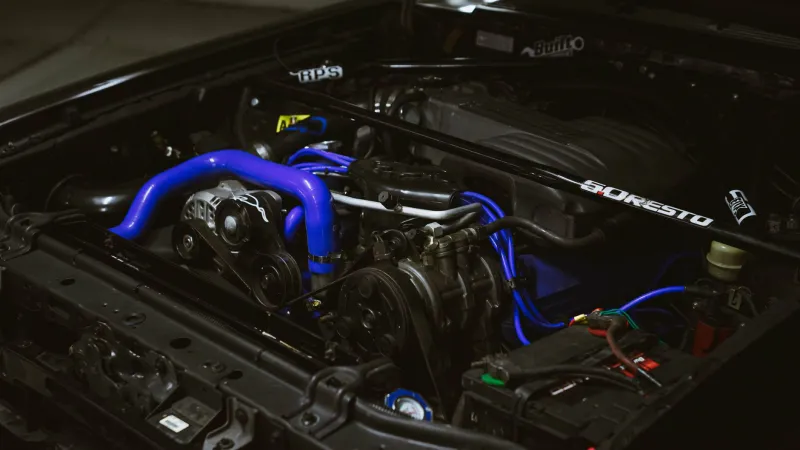
There's a certain satisfaction that comes with finding the right adapter to make things fit. You're elbow-deep in an engine bay that was never designed for an LS, and suddenly that $45 bracket from an online forum post feels like the answer to all your problems. Bolt it up, take a step back, and everything looks clean enough.
Except it usually isn't. And the trouble with adapter-heavy builds isn't that any one piece is necessarily bad — it's that each workaround you stack on top of the last one creates a new set of variables. By the time you're three or four adapters deep, you're not building a swap anymore. You're building a tolerance nightmare held together by optimism and thread-lock.
Why Adapters Feel Like the Right Call
Let's be honest about why builders go this route. LS swaps into non-LS chassis — think early Jeeps, Fox-body Mustangs, classic trucks, or European platforms — rarely have a clean off-the-shelf solution for every component. Motor mounts might exist, but the steering shaft still clears the header by a quarter inch. The transmission crossmember is close but not quite. The oil pan hits the front differential.
So you adapt. And adapting makes sense — up to a point. The LS community has been doing creative problem-solving for decades, and a lot of those solutions are genuinely well-engineered. Dedicated swap kits from reputable manufacturers go through real validation. Those aren't the adapters we're talking about.
The problem starts when you begin chaining together solutions that weren't designed to work with each other. Motor mounts from one vendor, a transmission adapter from another, a driveshaft spacer you machined yourself, and a header that required shimming the engine 3/8 of an inch off-center to clear the steering rack. Each individual decision seemed reasonable. Together, they're a slow-motion disaster.
The Compounding Problem Nobody Talks About
Here's where it gets technical, and where a lot of builders get burned.
Every adapter introduces a new interface — a new surface, a new set of fasteners, a new opportunity for movement. Individually, the deflection at any one of those interfaces might be imperceptible. But mechanical systems don't average out. They amplify. A small amount of flex at the motor mount combines with a small amount of play in the transmission adapter, which combines with a driveshaft that's now running at a slightly off angle, and suddenly you've got a vibration that shows up at exactly 58 mph and makes your passengers think something is about to fall off. Because something might be.
Alignment is the other silent killer. When you shim an engine to clear a header, you're changing the angle at which the transmission output shaft meets the driveshaft. Even a degree or two of deviation from the manufacturer's recommended operating angle accelerates U-joint wear dramatically. Run it long enough and you're not just replacing U-joints — you're dealing with output shaft damage or a driveshaft that decides to exit the vehicle at highway speed.
Parasitic drag is subtler but equally real. Adapters between the crankshaft and a non-compatible flexplate, or between the transmission and a transfer case it wasn't designed to bolt to, often introduce friction, misalignment, or both. You'll never see it on a dyno sheet because it shows up as heat and wear rather than a clean power loss. But it's bleeding efficiency every single mile.
When Cheap Adapters Become Expensive Failures
The false economy of bargain adapter solutions is one of the most consistent patterns we see in failed LS swap projects. A builder spends $12,000 on an engine and transmission, then tries to save $300 by sourcing a no-name bellhousing adapter from an overseas supplier with questionable material specs.
The thing is, adapters live in high-stress environments. They're dealing with torque, heat cycling, vibration, and in some cases, significant side-loading. A cast piece made from inferior alloy doesn't fail all at once — it cracks slowly, usually in a place you can't see without pulling everything apart. By the time you notice something's wrong, you might be looking at damaged bellhousing, a cracked block, or a transmission case that's been slowly walking itself into a shape it was never meant to hold.
High-quality adapter components from established manufacturers — the kind that have been designed with FEA analysis and tested under real load conditions — cost more for a reason. That reason is that they don't turn into shrapnel.
The Decision Framework: Adapt or Redesign?
So how do you know when adapting is acceptable and when you need to step back and rethink the approach? Here's a simple way to think about it.
Adapt when:
- The solution comes from a manufacturer with documented fitment history for your specific application
- You're solving a single interface problem, not chaining multiple workarounds together
- The adapter doesn't require you to compromise engine or drivetrain alignment beyond manufacturer tolerances
- You can inspect, service, and replace the adapter without a full teardown
Redesign when:
- You're stacking more than two adapter solutions to solve a single fitment problem
- Any one adapter requires another to compensate for the angle or position it introduced
- The solution puts critical components — U-joints, output shafts, flex plates — outside their designed operating parameters
- You're sourcing from unknown manufacturers because the established options don't work with your combination
That last point is worth sitting with. If the reputable swap kit manufacturers haven't solved your specific combination, that's information. It might mean your combination is genuinely novel and worth engineering properly. It might also mean it's a combination that doesn't work well, and the market has already figured that out.
Building It Right the First Time Is Cheaper
Every builder who's pulled apart an adapter-heavy swap and done it correctly the second time will tell you the same thing: the redo cost more than doing it right would have. Not just in parts, but in time, frustration, and occasionally in collateral damage to components that got stressed by the bad setup.
Sometimes the right answer is a custom motor mount fabricated by someone who knows what they're doing. Sometimes it's a different oil pan. Sometimes it's accepting that a particular chassis and a particular LS variant need more engineering than a stack of off-the-shelf adapters can provide.
The LS is one of the most swap-friendly engines ever built, but that doesn't mean it fits everywhere without thought. Respect the physics, source your hardware from people who've done the engineering, and resist the urge to solve a fitment problem by adding another layer to an already complicated stack.
Your future self — the one who isn't standing in a parking lot at 11 PM wondering why the driveshaft is making that noise — will thank you.