Wrenches Down, Dreams Dead: What Actually Killed These LS Swap Builds
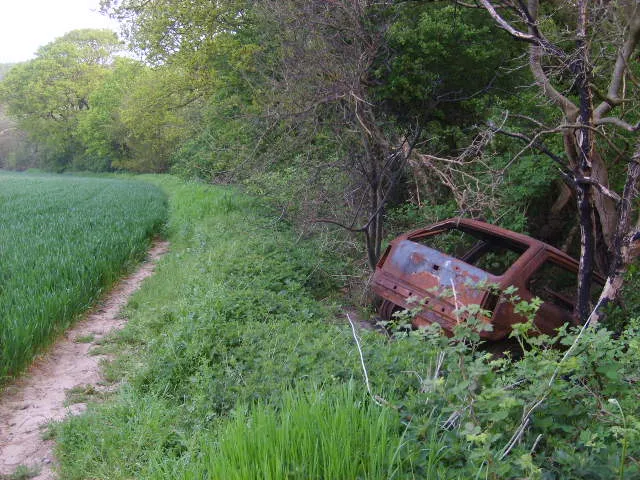
Photo: William Metcalfe, CC BY-SA 2.0, via Wikimedia Commons
There's a specific kind of silence that settles over a garage when a project stops moving forward. The car is still there. The engine might even be bolted in. But the motivation is gone, the budget is gone, or — worst of all — something broke that the builder didn't see coming and couldn't recover from. LS swaps die every day, and most of them don't make it into YouTube builds or Instagram finish-line posts. They end up listed on Craigslist, half-stripped, with a vague description and a phone number.
We spent weeks combing through forum threads on LS1tech, GBodyForum, and a handful of regional Facebook groups, plus talking to shop owners who've inherited other people's half-finished nightmares. What we found wasn't a single smoking gun — it was a pattern of compounding mistakes, each one survivable on its own, but lethal in combination.
The Build That Ran Out of Runway
One builder on a popular Midwest GM forum documented his 1979 Malibu LS swap over the course of three years. He sourced a 5.3 from a wrecked Silverado, bought a used T56, and started fabbing motor mounts in his driveway. He was methodical about it — lots of photos, detailed posts, good engagement from the community.
Then, around post 200, the updates stopped. When someone bumped the thread asking for a status check eight months later, he came back with a short reply: the car was sold, incomplete.
His explanation, buried in a few follow-up comments, told the whole story. He'd underestimated the wiring by about six months. Not the cost — the time. He'd planned to run a standalone harness himself, watched a few tutorials, and figured he'd knock it out over a couple of weekends. What he didn't account for was that he had a full-time job, two kids, and a wife who'd been patient for about as long as patience allows. The wiring sat untouched. The car took up the garage. The family needed the garage back.
The lesson: Timeline isn't just about hours in the shop. It's about life capacity. Build a schedule that reflects your actual availability, not your optimistic one.
When the Chassis Said No
A shop owner in Tennessee — we'll call him Marcus, because he asked us not to use his full name — described a customer car that came in as a "just finish it" job. The owner had purchased a 1967 Camaro that a previous builder had already shoehorned an LS3 into. The motor mounts were custom-fabbed, the headers were a set of mid-length units that technically fit, and the engine ran.
Except it didn't run right. The car pulled hard to the left under acceleration, the driveshaft had a vibration above 55 mph, and the cooling system couldn't keep up on warm days.
Marcus tore into it and found a cascading series of problems rooted in one original sin: the engine hadn't been centered properly in the chassis. It was cocked about half an inch to the driver's side, which threw off the driveshaft angle, loaded the motor mount on one side unevenly, and forced the headers into a position that required the collector to be routed in a way that choked airflow to one bank.
"The guy who built it just wanted it to fit," Marcus told us. "He never checked alignment. He got it close enough that it bolted up, and then he moved on. Every problem that car had traced back to that one thing."
The original builder had sold the car rather than fix it. The second owner paid for the diagnosis, the correction, and the follow-on repairs. It cost more than starting fresh would have.
The lesson: "Close enough" in fabrication is a loan you'll repay with interest. Check your centerline. Check your driveshaft angles. Check them again before you button anything up.
The Parts Car That Wasn't
This one comes from a thread on a G-body forum that's since gone partially offline, but screenshots have made the rounds enough times that most longtime readers have seen it. A builder pulled an LQ4 from a salvage yard truck, paid $400 for it, and figured he had the foundation of a budget build. He did a basic compression check at the yard — all cylinders came up within spec — and loaded it up.
Three weeks into teardown and inspection at home, he found a cracked block. Not a visible crack — one that showed up when he had the block magnafluxed at a machine shop. The crack ran from a main journal toward the water jacket. Totally undetectable without proper inspection equipment.
He'd already bought headers, motor mounts, and a custom crossmember for that specific block configuration. None of it was returnable. The replacement engine he found was a different casting, and the mounts didn't transfer over cleanly.
He eventually sold everything off and walked away from the project entirely.
The lesson: A compression check at the yard is the beginning of engine inspection, not the end of it. Budget for a proper machine shop inspection before you buy ancillary parts around a specific block. That $75 magnaflux job is the cheapest insurance you'll ever buy.
Death by Scope Creep
Maybe the most common build killer isn't a single catastrophic failure — it's the slow expansion of what the project is supposed to be. One builder documented his 1985 Monte Carlo swap over about two years. It started as a driver-quality street car. By month six, he'd decided to add a cam. By month ten, he was talking about a turbo setup. By month fourteen, he was pricing out a full interior restoration.
The car never ran under his ownership. He'd spent money on components for three different versions of the build without completing any of them. When he finally sold it, he estimated he'd put in roughly $9,000 and had a car that wasn't driveable.
"I kept thinking I'd regret not doing it right," he wrote in his final thread update. "But I should've just finished the basic swap first. I could've added stuff later."
The lesson: Define what "done" means before you start, and defend that definition aggressively. A running, driving LS swap that you later upgrade is infinitely more satisfying than a perpetual project that never sees pavement.
What the Survivors Did Differently
Talking to builders who've actually crossed the finish line, a few patterns emerge consistently. They set a budget and added 30 percent before they bought the first part. They identified their hardest problem — usually wiring or fabrication — and either learned that skill deeply or hired it out immediately, not as an afterthought. They resisted the urge to upgrade mid-build. And they treated their timeline as a real commitment, not a loose estimate.
None of that is revolutionary advice. But the builds that fail aren't failing because the builders didn't know better in theory — they're failing because the pressure of the moment made shortcuts feel reasonable. A crack that probably isn't serious. A measurement that's probably fine. A weekend that'll probably open up.
Probably is where LS swaps go to die.
The good news is that every one of these failed builds left behind documentation — forum posts, shop invoices, parts listings — that future builders can learn from. The community's institutional memory is one of its greatest assets, if you're willing to read the cautionary tales alongside the success stories.
Do that, and your build has a real shot at making it out of the garage.